THE BUYER'S GUIDE / SELECTION
Choosing a Layer Premix: Application Fit and Specification Checks for the 3% Finisher Formula
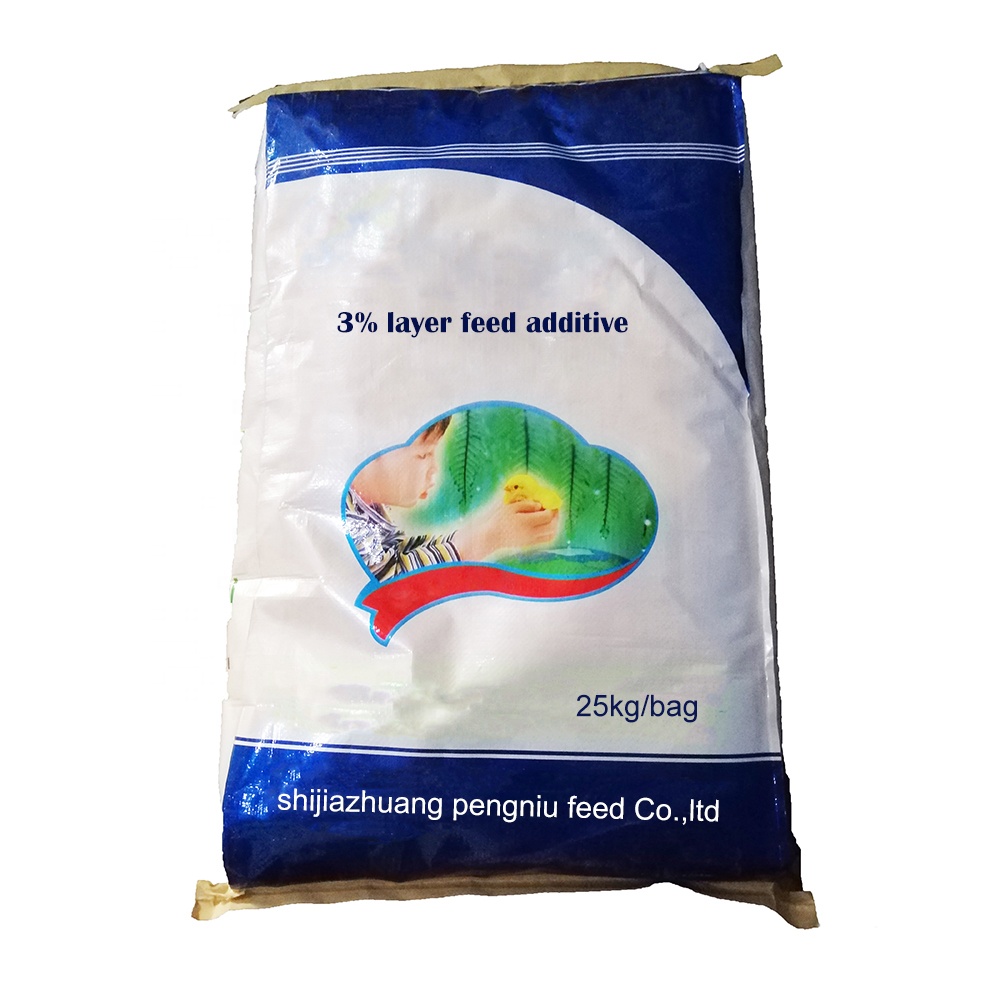
Selecting the right layer premix for the finishing phase requires matching nutrient composition to your flock's actual stage, production target, and basal diet. This guide walks procurement teams and feed manufacturers through the key criteria for evaluating a 3% finisher layer premix — from vitamin and mineral inclusion levels to amino acid balance and shell-quality support — using confirmed specifications from Shijiazhuang Roc Cattle I&E Trading Co.,Ltd.

Inclusion rate alignment: confirm the basal diet has a 3% premix slot and that flock stage is the finishing (mature lay) phase, not pullet or early-peak production.
Nutrient specification completeness: evaluate the confirmed vitamin panel (VA, VD3, VE, K3, B-group, biotin, choline chloride), mineral and trace element levels (Ca, P, Mn, Zn, Se, I, NaCl), amino acid content (DL-Met ≥ 2.8%), and functional additives (phytase, fish meal) against your breed standard and market regulations.
Why the Choice of Layer Premix Matters at the Finishing Stage
Not every layer premix is designed for the same production phase. A finisher-stage layer premix is formulated to support mature hens that have already reached peak lay, meaning the nutrient priorities shift: shell integrity, sustained egg size, and flock vitality take precedence over the rapid growth drivers needed in starter or grower diets. Procurement teams that apply the wrong inclusion rate or the wrong micronutrient profile risk both under-nutrition and unnecessary feed cost.
This guide focuses specifically on the 3% finisher layer premix offered by Shijiazhuang Roc Cattle I&E Trading Co.,Ltd, explaining the specification checks and application conditions a buyer should confirm before placing an order.
Criterion 1: Inclusion Rate and Phase Alignment
Inclusion rate is the first filter. A 3% inclusion rate means that 3 kg of premix is blended into every 100 kg of finished feed. This is a mid-range inclusion rate — higher than micro-premixes (0.01%–0.5%) but lower than complete concentrate blends — and it is sized to carry a meaningful vitamin, mineral, and amino acid payload without displacing too much of the energy and protein ingredients in the basal diet.
What to confirm:
- Is your basal diet formulated to accept a 3% premix slot? Diets already carrying high levels of dicalcium phosphate, sodium chloride, or calcium carbonate from other sources need to be recalculated, since those ingredients are also present in the premix.
- Is the flock genuinely in the finishing (mature lay) phase? The finisher profile is not designed for pullets approaching first lay or for early-peak production, where different calcium mobilisation and vitamin D3 demands apply.
Criterion 2: Vitamin Profile and Quantified Minimum Levels
Premix labels that list vitamins without minimum guaranteed levels offer little procurement certainty. The confirmed specification for this product states per-kilogram inclusion levels across a full fat- and water-soluble vitamin panel:
| Vitamin | Level per kg of premix |
|---|---|
| VA | 150,000–200,000 IU |
| VD3 | 35,000–100,000 IU |
| VE | ≥ 350 mg |
| VK3 | 25–100 mg |
| VB1 | ≥ 25 mg |
| VB2 | ≥ 130 mg |
| VB6 | ≥ 65 mg |
| VB12 | ≥ 0.35 mg |
| Nicotinic acid | ≥ 550 mg |
| D-Pantothenate | Confirmed present (see full spec) |
| Folic acid | ≥ 16.5 mg |
| Biotin | ≥ 2 mg |
| Choline chloride | ≥ 8 g |
Vitamin D3 and calcium together govern shell calcification, while B-vitamins support metabolic function and hatchability in breeder-layer crossover situations. The specified VA range supports mucous membrane integrity, which is particularly relevant in hot or dusty housing environments common in the Middle East and Southeast Asia.
What to confirm:
- Do the vitamin levels at 3% inclusion — once diluted into the full diet — meet the requirements of your target breed's nutrition standard?
- If you operate in a high-heat region, consider whether the upper bounds of the VD3 and VE ranges provide sufficient antioxidant and immune support margin.
Criterion 3: Mineral Panel and Trace Element Balance
The confirmed mineral specification per kilogram of premix covers both macro-minerals and trace elements:
| Mineral | Level per kg of premix |
|---|---|
| Fe | 0.6–6 g |
| Cu | 0.06–0.5 g |
| Zn | 0.6–2.4 g |
| Mn | 0.6–3 g |
| Se | 2–10 mg |
| I | ≥ 10 mg |
| Ca | 5.0–20.0% |
| Total P | 1.5–6.0% |
| NaCl | 3.5–10.5% |
Manganese is directly linked to eggshell and bone quality; selenium and iodine support thyroid function and immune response. The broad calcium range (5%–20% per kg of premix) reflects formulation flexibility: some customers supply most dietary calcium through separate limestone or oyster shell, so the premix calcium component is kept adjustable.
What to confirm:
- If your basal diet already carries significant inorganic salt or added calcium, verify the combined dietary levels do not exceed tolerable upper limits for your breed.
- Zinc, manganese, and selenium are regulated in some export markets. Confirm that the final formulated feed complies with the regulations of your destination country.
Criterion 4: Amino Acid and Functional Additive Composition
The product's confirmed ingredient list includes DL-Methionine (DL-Met ≥ 2.8% per kg), alongside lysine, phytase, and choline chloride. This is noteworthy for a premix at the 3% inclusion level:
- DL-Methionine at ≥ 2.8% reduces the buyer's need to source and add supplemental methionine separately, simplifying the basal diet formula and reducing the risk of blending errors.
- Phytase improves phosphorus bioavailability from plant-based feed ingredients, which supports total phosphorus reduction in excreta — relevant where environmental phosphorus regulations apply.
- Choline chloride (≥ 8 g/kg) supports liver function and fat metabolism, particularly important in high-producing hens prone to fatty liver syndrome.
- Fish meal is listed as an ingredient, meaning this premix is not suitable for markets or customers requiring fishmeal-free poultry nutrition programs.
What to confirm:
- Does your formulation target require additional methionine beyond the 2.8% present in the premix at 3% inclusion?
- Is fish meal acceptable under your buyer's or retailer's specifications?
Criterion 5: Physical Quality and Moisture Limit
The specification confirms a maximum moisture content of ≤ 10%. Moisture control is a practical quality indicator for premix: excessive water activity accelerates vitamin degradation and supports mold growth, particularly during sea or air freight to humid climates in Southeast Asia and the Middle East.
What to confirm:
- Verify that packaging and storage conditions at your facility will maintain moisture below the stated maximum through the product's shelf life.
- For long-distance shipment, request documentation on packaging specification (e.g., multi-wall bags with inner moisture barrier) before committing to large order volumes.
Application Fit Summary: When to Select This Product
The 3% finisher layer premix from Shijiazhuang Roc Cattle I&E Trading Co.,Ltd is a documented fit for buyers who:
- Are formulating for mature, producing laying hens in the finishing phase rather than pullets or broilers.
- Operate a 3% premix slot in their standard diet matrix and have confirmed that basal diet mineral and salt levels are not already high.
- Require an all-in-one micronutrient carrier that includes methionine, phytase, and choline chloride, reducing the number of separate additives to procure and blend.
- Supply to markets where fish meal is acceptable in the finished feed chain.
- Need a broad-spectrum vitamin and mineral panel supported by confirmed per-kilogram guaranteed levels rather than undisclosed proprietary blends.
Buyers whose flocks are at a different production stage, whose diet matrix uses a different inclusion rate, or whose customer specifications exclude fish meal should discuss alternative formulations with the supplier before ordering.
Questions to Ask the Supplier Before Purchase
- What is the recommended shelf life and the storage temperature range?
- Can the specification be adjusted (e.g., calcium range, methionine level) for a custom batch order?
- What are the minimum order quantities and available packaging formats?
- Are test reports or certificates of analysis available for each production batch?
These questions fall outside the scope of the confirmed specification and should be addressed directly with Shijiazhuang Roc Cattle I&E Trading Co.,Ltd's sales team before finalising a procurement decision.
THE PEOPLE

About the author
THE COMPANY
Shijiazhuang Roc Cattle I&E Trading Co.,Ltd
RC GROUP is mainly produce feed premix , animal herbal medicine and animal health etc. We are comprehensive company which involves the research, development, production, and sells. We have ourself factory , can finish the order quickly and the quantity is assured.
About Us ↗Visit company website ↗YOUR NEXT STEP
Bring your brief. Start a useful conversation.
Use case, specification, quantity and delivery window: make the next conversation specific.
Post time: October 27, 2026