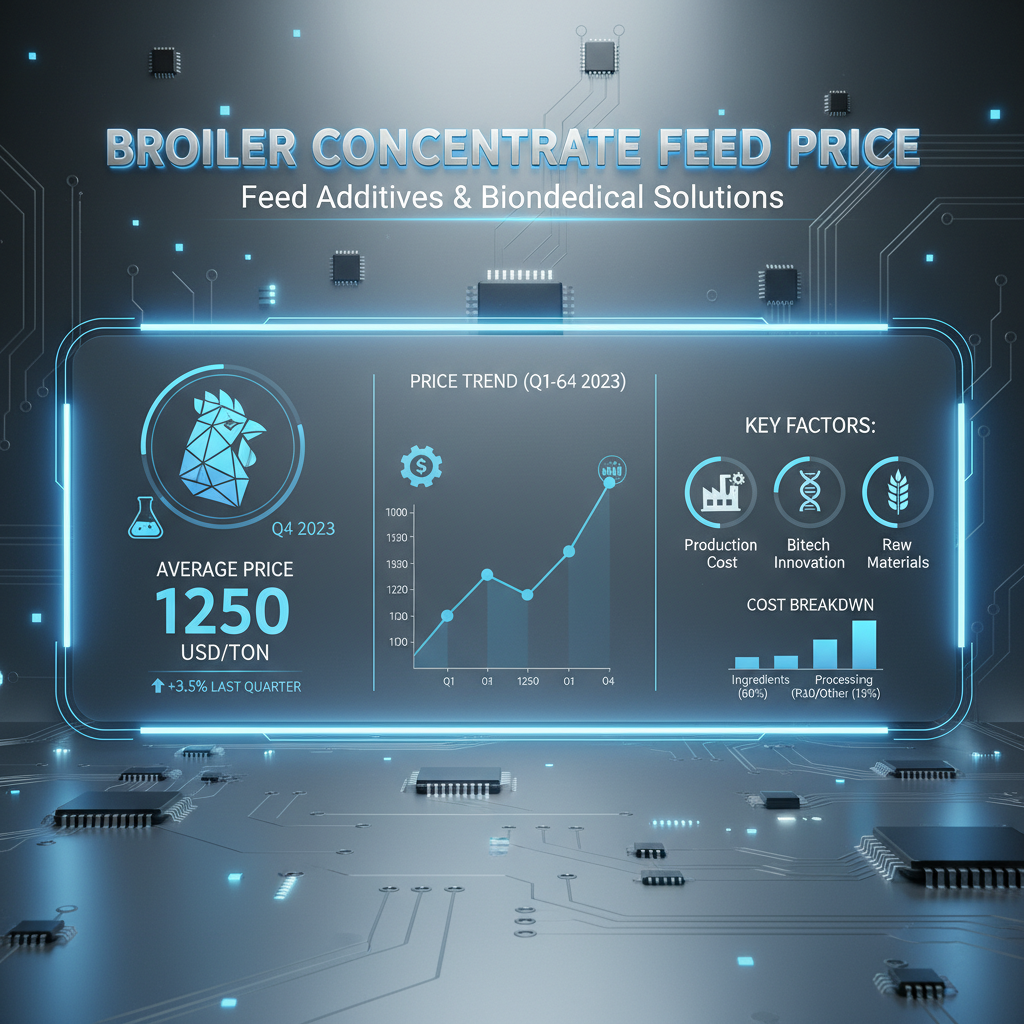
In the competitive landscape of poultry farming, managing the broiler concentrate feed price is one of the most critical factors for ensuring operational profitability. For commercial farmers, the cost of nutrition represents the largest share of production expenses, making the strategic procurement of high-quality concentrates essential for maintaining a healthy bottom line without compromising bird growth rates.
Understanding the fluctuations in the broiler concentrate feed price allows producers to optimize their feeding programs and hedge against market volatility. By leveraging professional-grade concentrates, farmers can precisely control nutrient intake, ensuring that broiler chickens reach their target market weight efficiently, thereby reducing the overall cost per kilogram of meat produced.
Global supply chain shifts and raw material availability continue to exert pressure on the broiler concentrate feed price, necessitating a deeper dive into how these costs are structured. From the inclusion of synthetic amino acids to the pricing of vitamins and minerals, every component plays a role in the final market value and the eventual success of the poultry enterprise.
Global Market Dynamics of Broiler Concentrate Feed Price
The global volatility of the broiler concentrate feed price is closely tied to the international commodities market. Data from the World Bank and FAO indicate that fluctuations in soybean meal and maize prices—the primary energy and protein sources—directly correlate with the cost of concentrates. When global harvests fail or trade barriers arise, the price of these essential nutrients spikes, creating a ripple effect that increases the cost of concentrated feed formulations globally.
Furthermore, geopolitical instability and shipping disruptions have introduced new variables into the pricing equation. For manufacturers in the pharmaceutical and veterinary sectors, balancing the cost of high-purity additives with the baseline broiler concentrate feed price is a constant challenge. The goal is to provide a product that ensures rapid broiler growth and immunity while remaining accessible to farmers in emerging markets.
Defining Broiler Concentrate Feed Price in Modern Poultry Science
In simple terms, the broiler concentrate feed price refers to the market cost of a nutrient-dense mixture containing vitamins, minerals, amino acids, and proteins, designed to be diluted with local energy sources like corn or wheat. Unlike complete feed, a concentrate allows the farmer to utilize their own grains, effectively lowering the total cost of feeding while maintaining the precise nutritional balance required for high-performance broiler breeds.
From an industry perspective, this pricing is not just about the sum of ingredients, but the value of the formulation's efficacy. A lower broiler concentrate feed price might seem attractive, but if the Feed Conversion Ratio (FCR) suffers, the actual cost of production increases. Therefore, the industry defines "value" as the intersection of purchase price and the resulting growth performance of the birds.
Modern poultry science emphasizes the role of concentrates in humanitarian needs, particularly in food-insecure regions. By providing affordable, high-quality concentrates, NGOs and governments can empower small-scale farmers to produce protein more efficiently, making the stability of the broiler concentrate feed price a matter of regional food security and economic resilience.
Core Components Influencing the Broiler Concentrate Feed Price
The first major driver of the broiler concentrate feed price is the cost of raw protein sources. High-quality fish meal or soybean concentrates provide the essential amino acids needed for muscle development. Any shift in the aquaculture industry or soy crop yields immediately reflects in the pricing of the final concentrate product.
Secondly, the integration of micronutrients—such as synthetic methionine, lysine, and specialized vitamin premixes—significantly impacts the broiler concentrate feed price. These additives are often produced through complex chemical processes; thus, the cost of energy and raw chemicals in the pharmaceutical sector directly influences the additive costs within the feed.
Lastly, manufacturing overhead and logistics contribute to the final broiler concentrate feed price. The precision required in mixing and the need for climate-controlled storage to prevent vitamin degradation add a layer of cost that ensures the product remains stable and effective until it reaches the farm gate.
Cost Efficiency and Scalability in Feed Procurement
Achieving cost efficiency requires a strategic approach to procurement and blending. Large-scale operations often negotiate long-term contracts to lock in a stable broiler concentrate feed price, protecting themselves from seasonal spikes. By scaling their orders, they can reduce the unit cost and optimize their logistics, passing these savings into a lower cost per bird.
Scalability also involves the ability to adjust the dilution ratio of the concentrate based on the age of the broiler. By using a higher-concentration premix during the starter phase and shifting to a more economical blend during the finisher phase, farmers can effectively manage the overall broiler concentrate feed price throughout the production cycle.
Comparison of Feed Efficiency vs Broiler Concentrate Feed Price
Global Applications of High-Efficiency Concentrates
In Southeast Asia and Africa, where access to complete commercial feeds is often limited by infrastructure, the use of concentrates is widespread. By importing a high-density nutrient mix, farmers can keep the broiler concentrate feed price manageable while leveraging local maize production to fill the bulk of the diet. This hybrid approach stimulates local agriculture while ensuring global nutritional standards.
In highly industrialized zones, such as the EU and USA, concentrates are used primarily for specialized dietary requirements, such as antibiotic-free or organic certifications. In these contexts, the broiler concentrate feed price is higher due to the stringent quality controls and the inclusion of natural growth promoters, but the premium price is offset by the higher market value of the final organic meat product.
Long-term Value and Sustainability of Optimized Pricing
Investing in a scientifically formulated concentrate, even if it presents a higher initial broiler concentrate feed price, yields long-term sustainability. Birds fed with balanced nutrition exhibit lower mortality rates and better gut health, reducing the need for expensive veterinary interventions and pharmaceutical treatments.
From an environmental perspective, optimized pricing is linked to nutrient efficiency. When the broiler concentrate feed price reflects a formula that maximizes absorption, there is less nitrogen and phosphorus excreted into the environment. This reduces the ecological footprint of the poultry farm, aligning commercial profit with environmental stewardship.
Ultimately, the trust between the feed manufacturer and the farmer is built on the consistency of the broiler concentrate feed price and the resulting bird performance. When price stability meets predictable growth, farmers can invest in better housing and automation, driving the entire industry toward a more professional and sustainable future.
Future Innovations Impacting Broiler Concentrate Feed Price
The future of the broiler concentrate feed price will be shaped by the integration of biotechnology and digital transformation. Precision nutrition—using AI to analyze bird growth in real-time—will allow for "dynamic concentrates" that change their nutrient density based on the exact needs of the flock, potentially lowering the overall cost of wasted nutrients.
Alternative proteins, such as insect meal (Black Soldier Fly) and single-cell proteins from fermentation, are poised to decouple the broiler concentrate feed price from the volatile soy and fish meal markets. These sustainable alternatives offer a stable price floor and a lower carbon footprint, making them highly attractive for the next generation of feed manufacturers.
Furthermore, the shift toward "green" pharmaceutical additives, such as herbal extracts and probiotics, is redefining the value proposition of concentrates. While these may initially increase the broiler concentrate feed price, the reduction in antibiotic reliance and the improvement in meat quality provide a significant competitive advantage in the global market.
Analysis of Future Feed Trends and Price Impact
| Innovation Type |
Impact on Feed Price |
Growth Efficiency |
Sustainability Score (1-10) |
| Insect Protein |
Moderate Decrease |
High |
9 |
| AI Precision Blending |
Initial Increase |
Very High |
8 |
| Herbal Probiotics |
Slight Increase |
Moderate |
10 |
| Synthetic Amino Acids |
Stable |
High |
6 |
| Single-Cell Protein |
Potential Decrease |
High |
9 |
| Enzyme Optimization |
Decrease |
Moderate |
7 |
FAQS
The variation is primarily due to the availability of local energy sources and the cost of importing concentrated micronutrients. In regions with strong soy and corn production, the baseline cost is lower. However, the price of the concentrate itself depends on the logistics of importing specialized additives and the local manufacturing capacity for high-precision mixing.
The best way is to optimize your Feed Conversion Ratio (FCR). By investing in a high-quality concentrate with a slightly higher broiler concentrate feed price, you often reduce the total amount of feed needed per kilogram of meat. Additionally, improving coop temperature and ventilation ensures birds use energy for growth rather than thermoregulation.
Usually, the quoted price refers to the concentrate product itself. The final cost of the feed depends on the farmer's own mixing capabilities and the cost of the grains they add. However, some suppliers offer "turnkey" solutions where the pricing includes the customized formulation service tailored to the farmer's specific available raw materials.
Antibiotic-free concentrates typically have a higher price point because they replace traditional growth promoters with expensive organic acids, essential oils, and probiotics. While the broiler concentrate feed price increases, this is often offset by the ability to sell the meat at a premium price in health-conscious markets.
Since soybean meal is a primary protein source in most concentrates, a price hike in soy leads to an almost immediate increase in the broiler concentrate feed price. Manufacturers may attempt to mitigate this by substituting some soy with other proteins, but this requires careful re-formulation to ensure the amino acid profile remains intact.
Yes, professional feed manufacturers can analyze your local grain quality (e.g., the protein content of your maize) and adjust the concentrate formula. This allows you to maintain optimal nutrition while potentially lowering the broiler concentrate feed price by removing redundant nutrients already present in your local grains.
Conclusion
Navigating the complexities of the broiler concentrate feed price is essential for any poultry producer aiming for long-term viability. By understanding the drivers of cost—from raw commodity fluctuations to the value of high-end pharmaceutical additives—farmers can make informed decisions that balance immediate expenditures with the ultimate goal of maximizing bird performance and meat quality.
As the industry moves toward a more sustainable and tech-driven future, the focus will shift from merely finding the lowest broiler concentrate feed price to seeking the highest "nutrient value per dollar." We encourage producers to embrace precision nutrition and sustainable protein alternatives to hedge against market volatility and ensure a profitable, eco-friendly production cycle. Visit our website for more professional solutions: www.rcpetfood.com