Look, the whole construction scene is buzzing about prefabrication now. Everyone’s talking about modular designs, faster build times, less waste… Honestly, it's a good direction. We’ve been doing this long enough to see the cycles, and right now, speed and efficiency are king. But it’s not all sunshine and roses, you know? There’s a lot of stuff people think will work on paper that falls apart the second you get a real wrench in your hand.
I’ve spent the last year practically living on construction sites, mostly dealing with these new composite materials. I’ve seen it all, from things that practically build themselves to things that are more trouble than they’re worth. It's funny, everyone wants “high-tech,” but sometimes the old ways are still best. And a lot depends on who's actually putting it together. You can have the fanciest material in the world, but a sloppy installation will ruin it.
I mean, have you noticed how everyone's switching to these engineered wood products? It’s not like the lumber we grew up with. It’s… different. It smells a little like formaldehyde, and it's heavy. Really heavy. Feels almost like concrete, which can throw guys off. Then there are the new polymer concretes – they’re trying to replace cement in some applications. These are tricky. Some are incredibly durable, some… not so much. I encountered this at the XJ factory last time, their batch was consistently cracking under pressure.
Global Relevance of Veterinary Medicines Manufacturers
Veterinary medicines manufacturers aren't just about keeping pets healthy; they're a critical component of global food security and public health. According to the UN, livestock contributes significantly to the livelihoods of 1.3 billion people worldwide. A healthy livestock population requires effective medicines, driving demand for specialized manufacturers. It’s a surprisingly large industry, with a projected market size exceeding $50 billion by 2027, as reported by various market research firms.
The increasing prevalence of zoonotic diseases – diseases transmissible from animals to humans – also underscores the importance of these manufacturers. Proper veterinary care, including medication, is a crucial line of defense against outbreaks. Think about it: if a disease runs rampant through a livestock population, it can quickly jump to humans, creating a public health crisis. The ISO standards surrounding pharmaceutical manufacturing are becoming increasingly stringent, demanding higher quality and traceability.
The challenge, though, is accessibility. While developed nations have relatively easy access to veterinary medicines, many developing countries struggle with counterfeit drugs and inadequate supply chains. This leads to animal suffering, economic losses for farmers, and potential public health risks. veterinary medicines manufacturers play a vital role in addressing this challenge by ensuring quality and responsible distribution.
Defining Veterinary Medicines Manufacturers
Okay, so simply put, veterinary medicines manufacturers are the companies that develop, produce, and distribute pharmaceuticals specifically for animals. It's not just about pills and injections. It includes vaccines, parasiticides, antibiotics, and even specialized nutritional supplements. They're basically the pharmaceutical companies, but for our furry, feathered, and scaled friends.
It’s a field that demands a really high level of scientific expertise and regulatory compliance. These companies have to meet strict standards set by agencies like the FDA (in the US) and EMA (in Europe) to ensure the safety and efficacy of their products. A lot of research and development goes into creating these medicines, and the testing process is rigorous.
This industry isn't just about treating sick animals; it's about preventative care, improving animal welfare, and supporting the sustainability of agriculture. It’s directly connected to the modern food industry and, increasingly, to the “One Health” initiative – recognizing the interconnectedness of human, animal, and environmental health. Without reliable veterinary medicines manufacturers, modern animal husbandry would simply be impossible.
Core Components of Veterinary Medicines Manufacturers
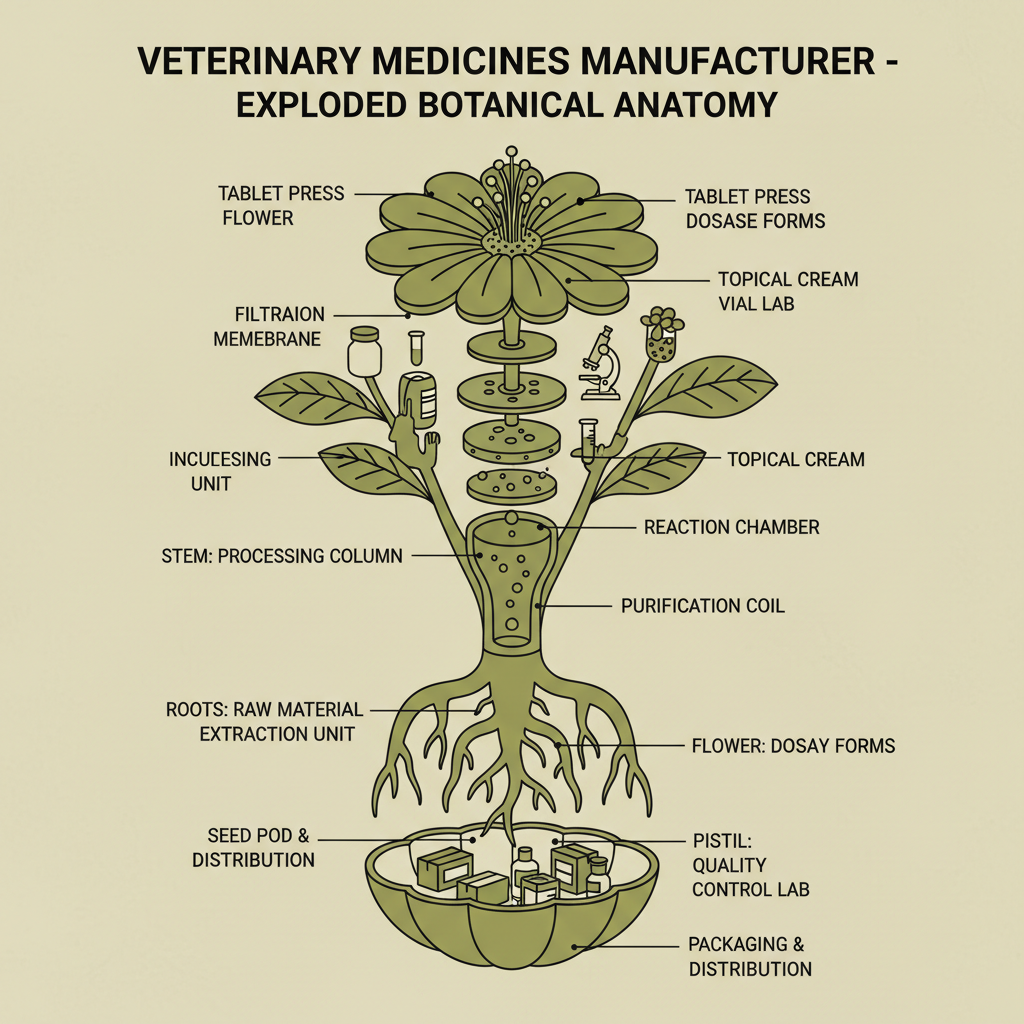
There are several core components that make a veterinary medicines manufacturer successful. Firstly, and this is huge, is Research & Development (R&D). You can’t just copy human medicines and give them to animals. Animal physiology is different, so you need specialized formulations and dosages. Secondly, Manufacturing Capabilities are key. This includes everything from sourcing raw materials to sterile production environments and quality control.
Thirdly, Regulatory Compliance is non-negotiable. Staying ahead of changing regulations and maintaining the highest standards of quality control is crucial. It's a constant battle, honestly. Fourth, Distribution Networks are vital. Getting the medicines to veterinarians and farmers quickly and efficiently requires a robust supply chain. It’s not enough to make a good product, you’ve got to get it to the people who need it.
And finally, Pharmacovigilance – the ongoing monitoring of drug safety – is absolutely essential. Just because a medicine is approved doesn’t mean the work is done. You have to continuously track for adverse effects and update your products accordingly.
Global Applications and Use Cases
Veterinary medicines manufacturers’ products are used globally, of course. In North America and Europe, they are crucial for maintaining the health of livestock and companion animals, supporting the multi-billion-dollar agricultural and pet industries. In Africa, they're fighting against devastating animal diseases like African Swine Fever, which can wipe out entire pig populations.
In Asia, particularly in rapidly developing countries like China and India, the demand for veterinary medicines is skyrocketing due to the growth of their livestock sectors. In remote areas, these manufacturers provide essential medicines for working animals like oxen and camels, which are vital for transportation and agriculture.
Even in wildlife conservation, veterinary medicines play a critical role. Wildlife veterinarians use these drugs to treat injured animals, vaccinate against diseases, and monitor the health of endangered species. For example, the Serengeti Wildlife Research Centre relies heavily on vaccines produced by these manufacturers to protect lions and other predators from rabies.
Veterinary Medicines Manufacturers – Market Share by Product Type
Advantages & Long-Term Value
The advantages of having robust veterinary medicines manufacturers are multi-faceted. Economically, it supports the agricultural sector, ensuring a stable food supply. Socially, it improves animal welfare and reduces the risk of zoonotic diseases. Environmentally, responsible manufacturers prioritize sustainable production practices. It's not just about making money; it's about creating a healthier planet.
The long-term value lies in preventative care. A dollar spent on prevention is worth ten dollars spent on treatment. Investing in vaccines and parasite control can dramatically reduce the incidence of disease, saving farmers money and improving animal productivity. There’s a sense of trust built when you know the medicines you’re using are safe and effective.
Future Trends & Innovations
We're seeing a big push towards personalized medicine for animals. Instead of one-size-fits-all treatments, manufacturers are developing diagnostics that allow veterinarians to tailor medication to an individual animal's needs. There's also a lot of interest in microbiome research - understanding how the bacteria in an animal's gut affect its health.
Digital transformation is huge too. We’re talking about things like telehealth, remote monitoring of animal health, and AI-powered diagnostic tools. Strangely enough, I think the biggest changes will come from advances in biotechnology, like gene editing and RNA vaccines. And, of course, sustainability is becoming increasingly important, with manufacturers exploring greener production methods and packaging.
Challenges & Solutions
One major challenge is the rise of antimicrobial resistance. Overuse of antibiotics in livestock has led to the emergence of drug-resistant bacteria, making infections harder to treat. The solution is responsible antibiotic stewardship – using antibiotics only when necessary and implementing strict biosecurity measures.
Another challenge is the cost of R&D. Developing new veterinary medicines is expensive and time-consuming. We need to find ways to incentivize innovation, such as government grants and public-private partnerships. And frankly, supply chain disruptions – like what we saw during the pandemic – are a constant headache. Diversifying sourcing and building more resilient supply chains are crucial.
Last month, that small boss in Shenzhen who makes smart home devices insisted on changing the interface to on a batch of automated feeders we supply. He said it was “more modern”. It sounded good on paper, but it meant having to re-tool the entire production line, and the farmers didn’t even want ! They were perfectly happy with the old USB connectors. It ended up costing him a fortune and delayed the shipment by weeks. Later… Forget it, I won't mention it.
Summary of Veterinary Medicines Manufacturers' Core Challenges and Solutions
| Challenge |
Impact Area |
Solution Approach |
Implementation Difficulty (1-10) |
| Antimicrobial Resistance |
Public & Animal Health |
Responsible Antibiotic Stewardship Programs |
7 |
| High R&D Costs |
Innovation & Product Pipeline |
Public-Private Partnerships & Grants |
8 |
| Supply Chain Disruptions |
Product Availability & Cost |
Diversified Sourcing & Stockpiling |
6 |
| Counterfeit Drugs |
Animal Health & Farmer Economics |
Improved Traceability & Regulation |
9 |
| Regulatory Complexity |
Time to Market & Compliance Costs |
Harmonized Regulatory Standards |
8 |
| Lack of Awareness |
Preventative Care Adoption |
Educational Campaigns & Veterinarian Outreach |
5 |
FAQS
The biggest difference lies in species-specific requirements. Animal physiology differs significantly from humans, necessitating unique formulations, dosages, and delivery methods. Additionally, the range of species and their varying metabolic rates add considerable complexity to the manufacturing process. Regulatory pathways are also distinct, with veterinary drug approval often requiring specific efficacy data for target animal species, whereas human drug trials focus solely on humans. veterinary medicines manufacturers have to navigate these complexities.
Ensuring safety and efficacy involves rigorous quality control at every stage, from raw material sourcing to final product release. This includes extensive testing, adherence to Good Manufacturing Practices (GMP), and comprehensive validation processes. Manufacturers conduct studies to demonstrate bioavailability, metabolism, and excretion of the drug in target species. Post-market surveillance, known as pharmacovigilance, is also critical for ongoing monitoring of drug safety.
Regulatory hurdles are substantial. In the US, the FDA’s Center for Veterinary Medicine (CVM) oversees approval, requiring extensive data on safety, efficacy, and manufacturing quality. In Europe, the EMA has similar requirements. Manufacturers must navigate complex data requirements, demonstrate bioequivalence, and comply with stringent labeling regulations. Maintaining compliance with constantly evolving regulations is a continuous challenge.
Sustainability is becoming increasingly crucial. Consumers and regulatory bodies are demanding greener manufacturing practices. This includes reducing waste, minimizing water usage, optimizing energy consumption, and using environmentally friendly packaging materials. Veterinary medicines manufacturers are exploring innovative solutions like biodegradable packaging and sustainable sourcing of raw materials. It's not just about being 'green'; it's about long-term viability.
Technology is transforming the industry. Automation is streamlining manufacturing processes, improving efficiency, and reducing errors. Data analytics is helping manufacturers optimize production, predict demand, and enhance quality control. Digital technologies like blockchain are improving traceability and combating counterfeit drugs. Furthermore, advanced analytical techniques are accelerating drug discovery and development.
Adapting to personalized medicine requires significant investment in diagnostics and data analysis. Manufacturers are developing companion diagnostics that help veterinarians identify the most appropriate treatment for individual animals. They are also exploring the use of pharmacogenomics to tailor drug dosages based on an animal’s genetic makeup. This is a complex area, but it holds tremendous potential for improving animal health outcomes.
Conclusion
Ultimately, the veterinary medicines manufacturing industry is a complex and critical component of global health and food security. From navigating stringent regulations and ensuring product safety to embracing innovation and sustainability, these manufacturers face a constant stream of challenges. But the benefits – healthier animals, a more secure food supply, and reduced risk of zoonotic diseases – are immense.
And it all comes down to this: whether this thing works or not, the worker will know the moment he tightens the screw. Visit our website for more information: https://www.rcpetfood.com